Cost of Living: Cyprus vs Germany 2026
Last updated: 2026-03-30
Average savings
30-40% cheaper
Overview
Germany is one of the most expensive countries in Western Europe for entrepreneurs and professionals, with high housing costs, expensive healthcare insurance, and some of the highest utility prices on the continent. Cyprus offers a significantly lower cost of living, with the most dramatic savings in healthcare, utilities, and dining.
For a German entrepreneur earning EUR 100,000, the double benefit of lower taxes (~5% vs ~43% effective) and lower cost of living (30-40% cheaper) creates a combined annual advantage of EUR 50,000-60,000. That is potentially EUR 250,000-300,000 over five years.
This comparison uses prices from Munich, Frankfurt, and Hamburg for Germany, and Limassol and Larnaca for Cyprus. Berlin is slightly cheaper than the other German cities but the gap has narrowed significantly in recent years.
Monthly Budget Breakdown
| Category | 🇨🇾 Cyprus (Limassol) | 🇩🇪 Germany | Savings |
|---|---|---|---|
| Rent (2-bed apartment) | EUR 650-900 | EUR 900-1,600 | 30-45% |
| Groceries | EUR 250-350 | EUR 300-400 | 15-25% |
| Dining out (2x/week) | EUR 120-160 | EUR 200-280 | 40-45% |
| Transport | EUR 100-150 | EUR 80-120 | Germany cheaper |
| Utilities | EUR 100-150 | EUR 200-300 | 40-50% |
| Healthcare | EUR 50-80 (GHS) | EUR 400-900 (insurance) | 80-90% |
| Internet + mobile | EUR 50-70 | EUR 50-70 | Similar |
| Gym + leisure | EUR 40-60 | EUR 30-50 | Similar |
| Monthly total | EUR 1,400-1,900 | EUR 2,300-3,800 |
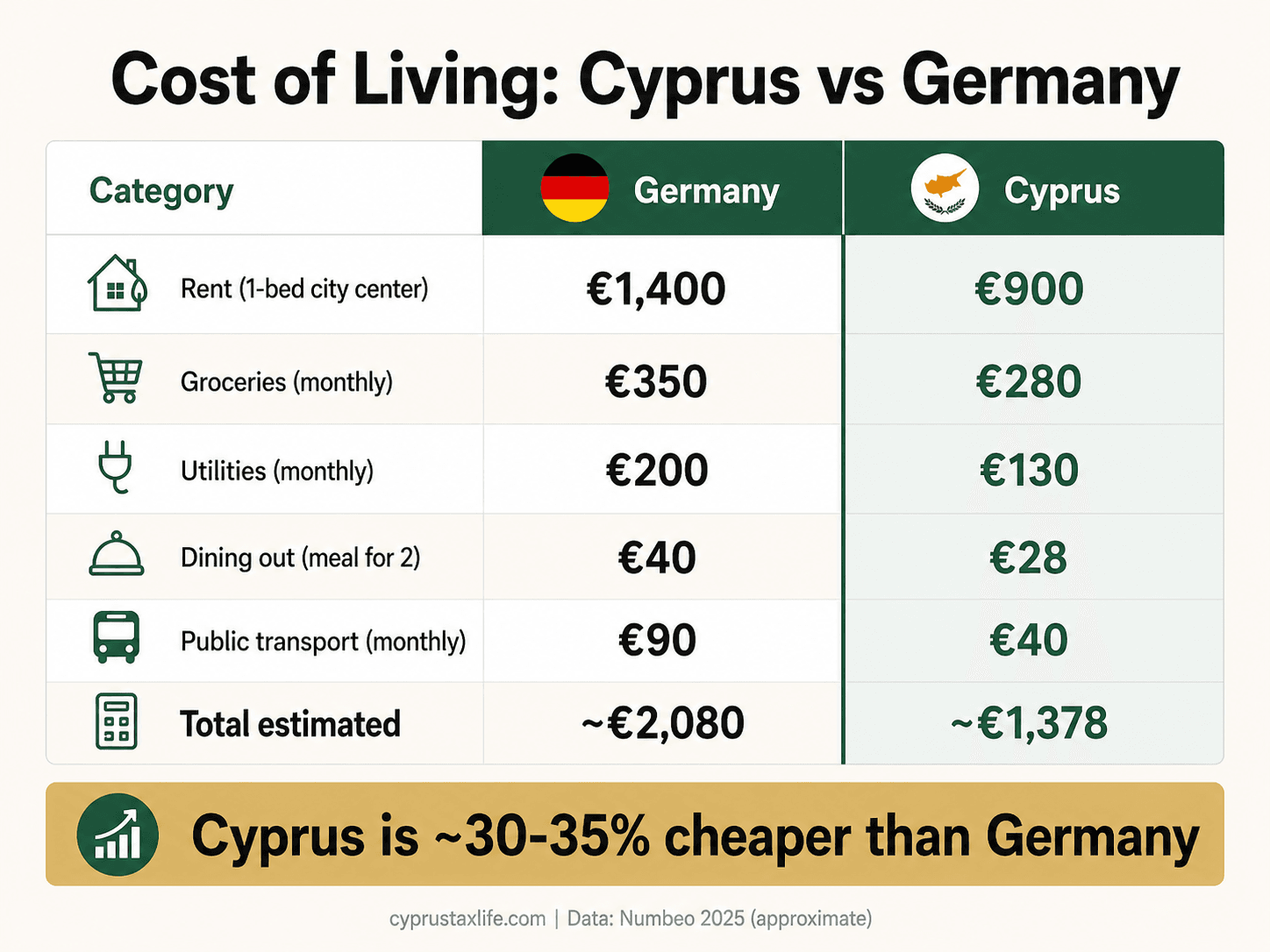
Housing: Cyprus vs Germany
Housing costs differ substantially. German cities have experienced a housing crisis, with rents rising 30-50% over the past decade in major cities.
Munich: A 2-bedroom apartment costs EUR 1,400-2,000/month. Munich is the most expensive German city. Frankfurt: EUR 1,100-1,600. Hamburg: EUR 1,000-1,500. Berlin: EUR 900-1,400 (rapidly catching up).
In comparison, Limassol (Cyprus's most expensive city) offers 2-bedroom apartments at EUR 700-1,000. Larnaca starts at EUR 550-750.
German rental laws (Mietpreisbremse) offer some tenant protections but also make finding apartments extremely competitive. Wait lists of 50-100+ applicants per apartment are normal in Munich and Frankfurt.
In Cyprus, the rental market is more relaxed with good availability. No equivalent of the German Schufa credit check is required.
Nebenkosten (additional costs) in Germany are notoriously high: utilities, building insurance, waste disposal, and property tax (Grundsteuer) often add EUR 200-400/month on top of base rent. In Cyprus, these additional charges are minimal or included.
Groceries & Dining
German supermarkets (Aldi, Lidl, Rewe, Edeka) are known for competitive pricing, and Germany is one of the cheapest countries in Western Europe for groceries. Cyprus is slightly more expensive but the gap is smaller than many expect.
A weekly supermarket shop: EUR 60-80 in Cyprus vs EUR 65-90 in Germany (at similar quality levels). The difference is approximately 10-15%.
Where Germany is cheaper: bread, dairy (especially German brands), processed foods, and bulk items. Germany's discount supermarket culture (Aldi, Lidl) keeps prices low.
Where Cyprus is cheaper: fresh produce (tomatoes, cucumbers, citrus), olive oil, halloumi, fresh fish, alcohol. Local Cypriot products are excellent value.
Dining out: This is where Cyprus has a clear advantage. A restaurant meal for two costs EUR 30-45 in Cyprus versus EUR 50-80 in Germany. A beer in a restaurant: EUR 3-4 in Cyprus vs EUR 4-6 in Germany. Coffee: EUR 2.50-3.50 vs EUR 3-5.
Transport
Germany has one of the best public transport systems in Europe. The Deutschlandticket (EUR 49/month) provides unlimited regional public transport nationwide. This is exceptional value.
Cyprus has no equivalent. The island is car-dependent. Monthly car costs (fuel, insurance, maintenance) run EUR 100-150.
However, car ownership is cheaper in Cyprus: no Kfz-Steuer (vehicle tax) equivalent, much cheaper insurance (EUR 300-500/year vs EUR 500-1,200 in Germany), cheaper used cars, and no TUV inspection fees.
For someone who needs a car regardless (most entrepreneurs), Cyprus is slightly cheaper. For someone who can rely entirely on public transport in Germany, Germany has the advantage.
Fuel prices are similar: EUR 1.30-1.50/liter in Cyprus vs EUR 1.60-1.80 in Germany.
Healthcare
Healthcare represents one of the largest cost differences and is often overlooked.
In Germany, health insurance is mandatory. Employees split costs with employers (approximately 15.5% of gross salary total). Self-employed individuals must pay the full amount themselves, which costs EUR 400-900/month depending on income and whether they choose public (GKV) or private (PKV) insurance.
In Cyprus, the GHS healthcare system costs 2.65% of all income. For an entrepreneur earning EUR 5,000/month, that is approximately EUR 132/month, covering comprehensive healthcare with minimal copays.
Annual healthcare cost comparison for a self-employed person earning EUR 60,000: Germany: EUR 6,000-10,800 (GKV or PKV) Cyprus: EUR 1,590 (GHS at 2.65%)
Savings: EUR 4,400-9,200 per year on healthcare alone.
Quality: German healthcare is world-class. Cyprus GHS is adequate for routine care and improving. For specialized treatments, many Cyprus residents travel to Germany, Israel, or Greece (short flights, often covered by private insurance if you carry a supplementary policy at EUR 50-100/month).
Lifestyle & Quality of Life
The lifestyle differences are pronounced:
Climate: Cyprus averages 340 days of sunshine versus approximately 1,500-1,800 hours in German cities. German winters (November-March) with 7-8 hours of daylight and cold temperatures contrast sharply with mild Cyprus winters (15-18C, clear skies).
Work-life balance: German culture values punctuality and structured work. Cyprus is more relaxed, with a Mediterranean approach to time. For remote workers, Cyprus offers a healthier balance of work and outdoor living.
Outdoor activities: Year-round in Cyprus (beaches, hiking, water sports). Seasonal in Germany (limited outdoor options in winter months). This reduces gym and entertainment costs since free outdoor exercise is always available in Cyprus.
Social integration: Germany is famously difficult for foreigner integration (language barrier, cultural norms). Cyprus is much easier, with English widely spoken and a welcoming attitude toward international residents.
Cost of social life: A night out in Cyprus (dinner + drinks for two) costs EUR 50-70 versus EUR 80-120 in Germany.
Do not forget the tax savings
Beyond the lower cost of living, Cyprus Non-Dom entrepreneurs pay approximately 5% effective tax versus 30-50% in most European countries. On EUR 100,000 revenue, that is an additional EUR 25,000-45,000 in annual savings on top of the cost of living difference.
See full tax comparison →Frequently Asked Questions
How much cheaper is Cyprus than Germany?+
Is healthcare quality in Cyprus comparable to Germany?+
What salary do I need to live well in Cyprus?+
Do I need a car in Cyprus?+
Is internet good enough for remote work in Cyprus?+
What about German products and food in Cyprus?+
Sources and References
Price data: Numbeo (2025/2026), local surveys, personal experience, and community reports. All prices are approximate and vary by personal lifestyle and exact location. Last verified: 2026-03-30.
Related Articles
Germany's exit tax (§6 AStG) taxes unrealised gains on shares >1% when you emigrate. Moving to Cyprus (EU): you can defer payment indefinitely. Full breakdown for German founders and investors.
 Miriam Alonso
- Tax Planning
- Relocation
Canada's departure tax treats you as having sold your worldwide assets the day you stop being a tax resident. What is caught, what is exempt, how to defer it, and what the cost-base reset means for where you go next.
![Countries With No Property Tax [2026]: The Real Cost](https://cdn.sanity.io/images/glqahhks/production/6f7ea0efceed8a692ad7c3785efa8baaf4d1e208-1679x937.jpg?w=700&q=75&auto=format)
Compare countries with no property tax and the stamp duty they charge instead. See the 10-year holding cost that makes Cayman pricier than Portugal.
Miriam AlonsoConnect with the right accountant for your relocation
We match you with a specialist advisory firm that works with expats relocating to Cyprus. Tax planning, Non-Dom registration, company setup - one introduction, no cold searching.